
Agriculture and Infrastructure
E.g. cattle farms, solar farms, transportation projects

year
role & Skills
Design System, team management
Team size
1 researcher, 2 designers, 5 devs, 2 BAs
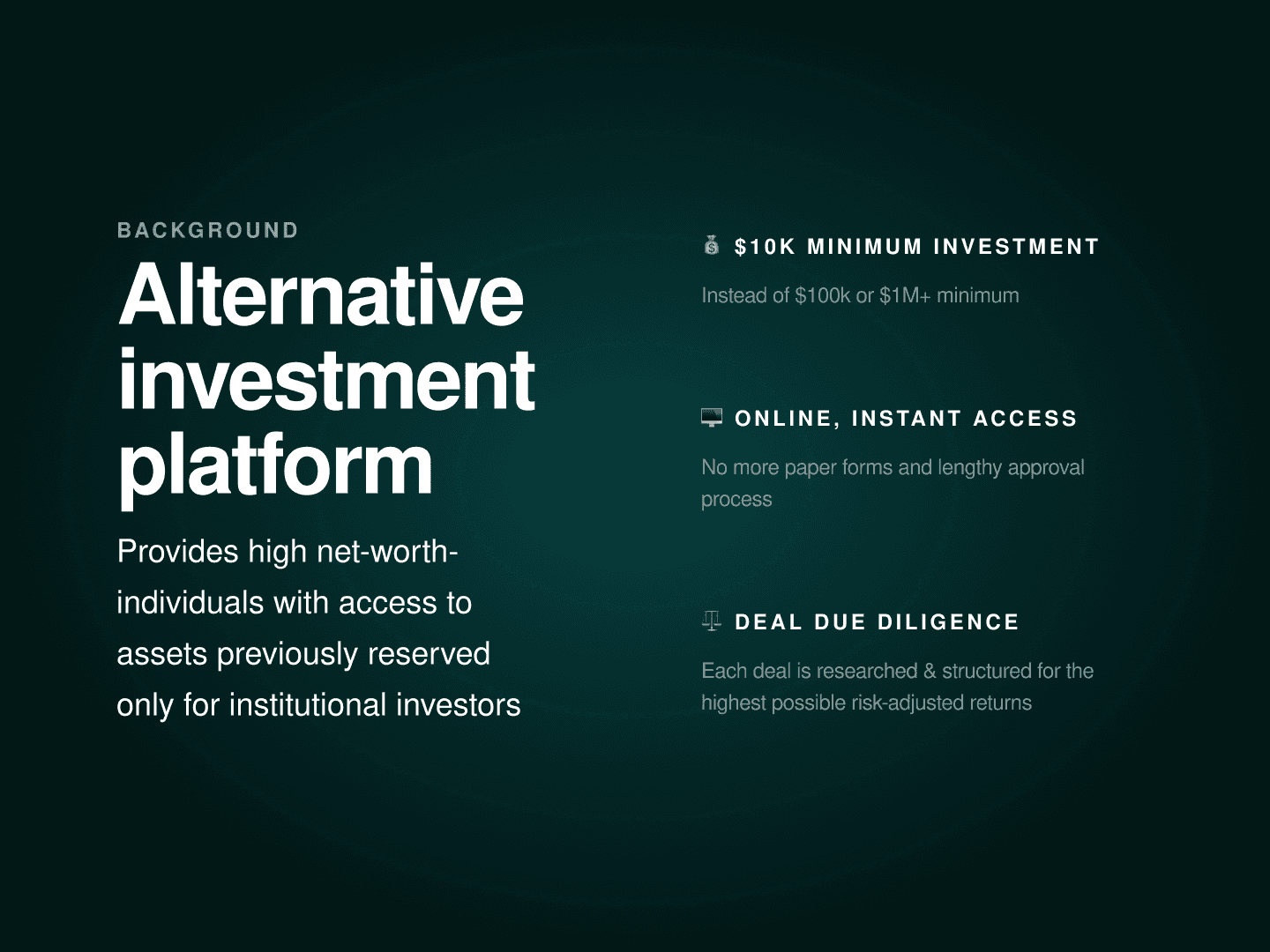
Vision
Solutions
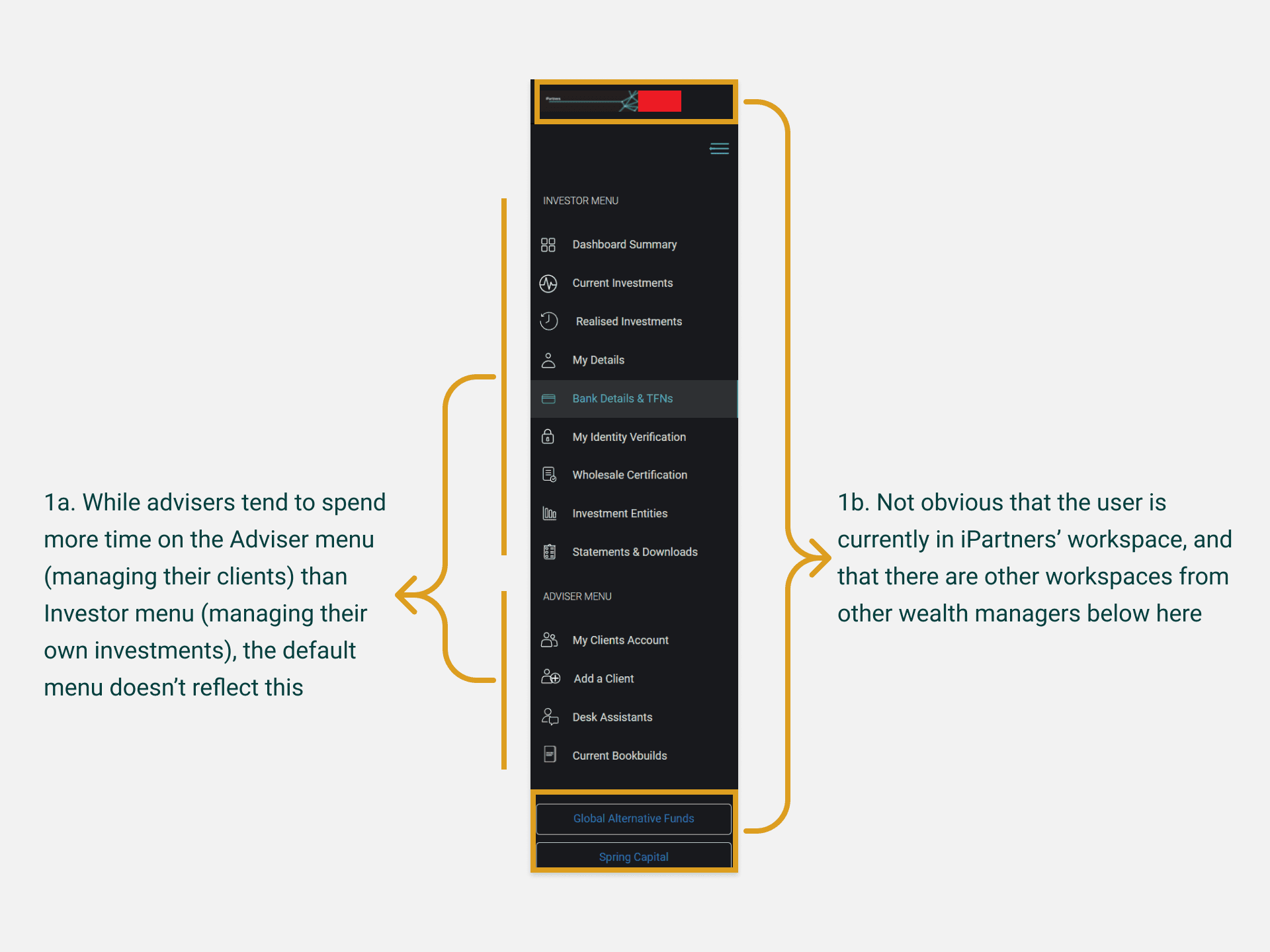
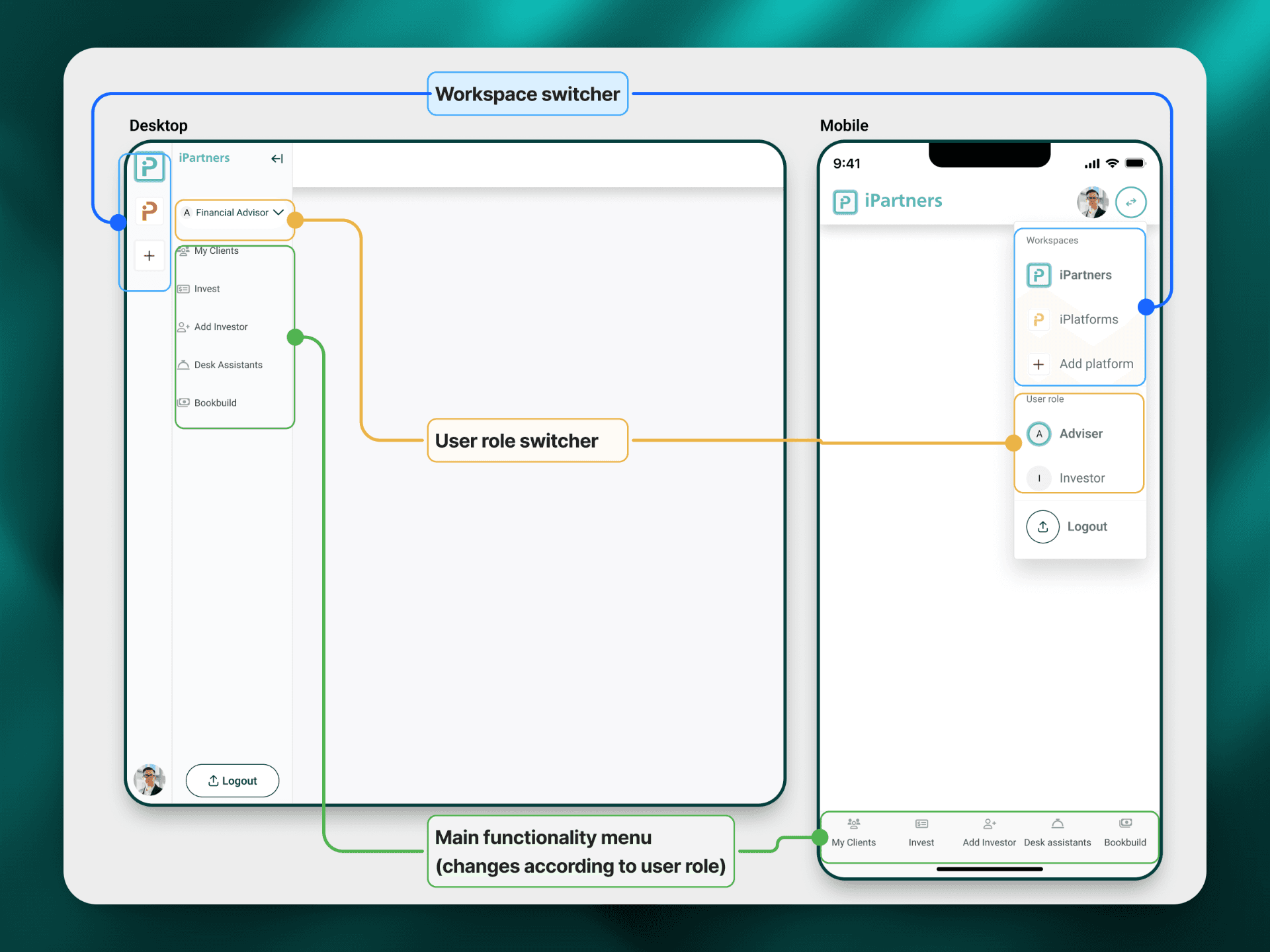
On desktop, collapse the sidebar into a small column to make the most of space, and create on-hover sidebar labels to help users find the right menu item while the sidebar is collapsed.
Before: Within each client's account, having 2 sub-menu navigations make it confusing for advisers / desk assistants. Overlap between Personal details, Bank details & TFN, and Onboarding tabs also adds to the confusion.
After: For each client, all information are consolidated into 1 horizontal sub-menu, with adviser-focused tasks of investment management on the left and assistant-focused tasks of administration (e.g. onboarding & reporting) on the right.
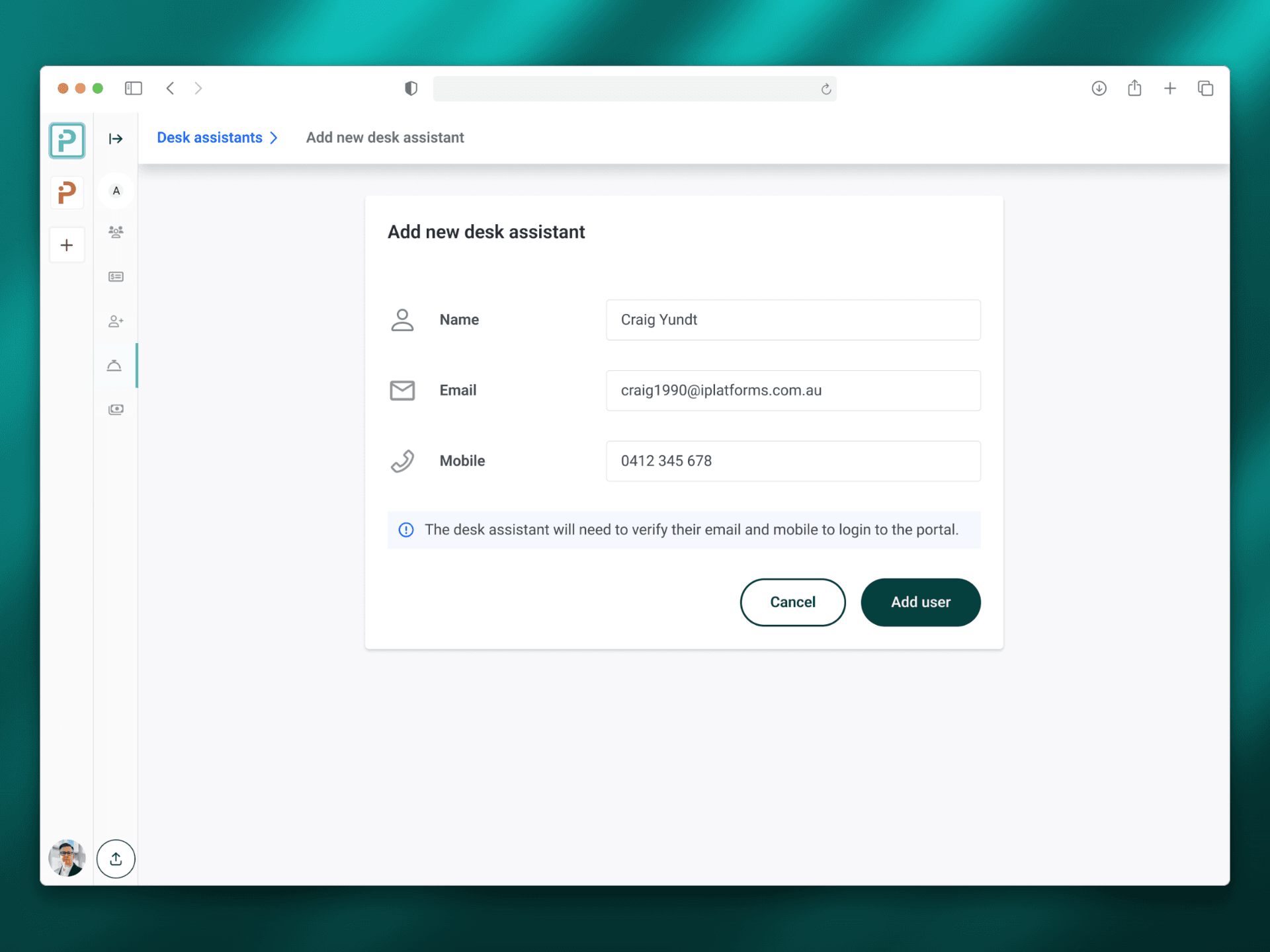
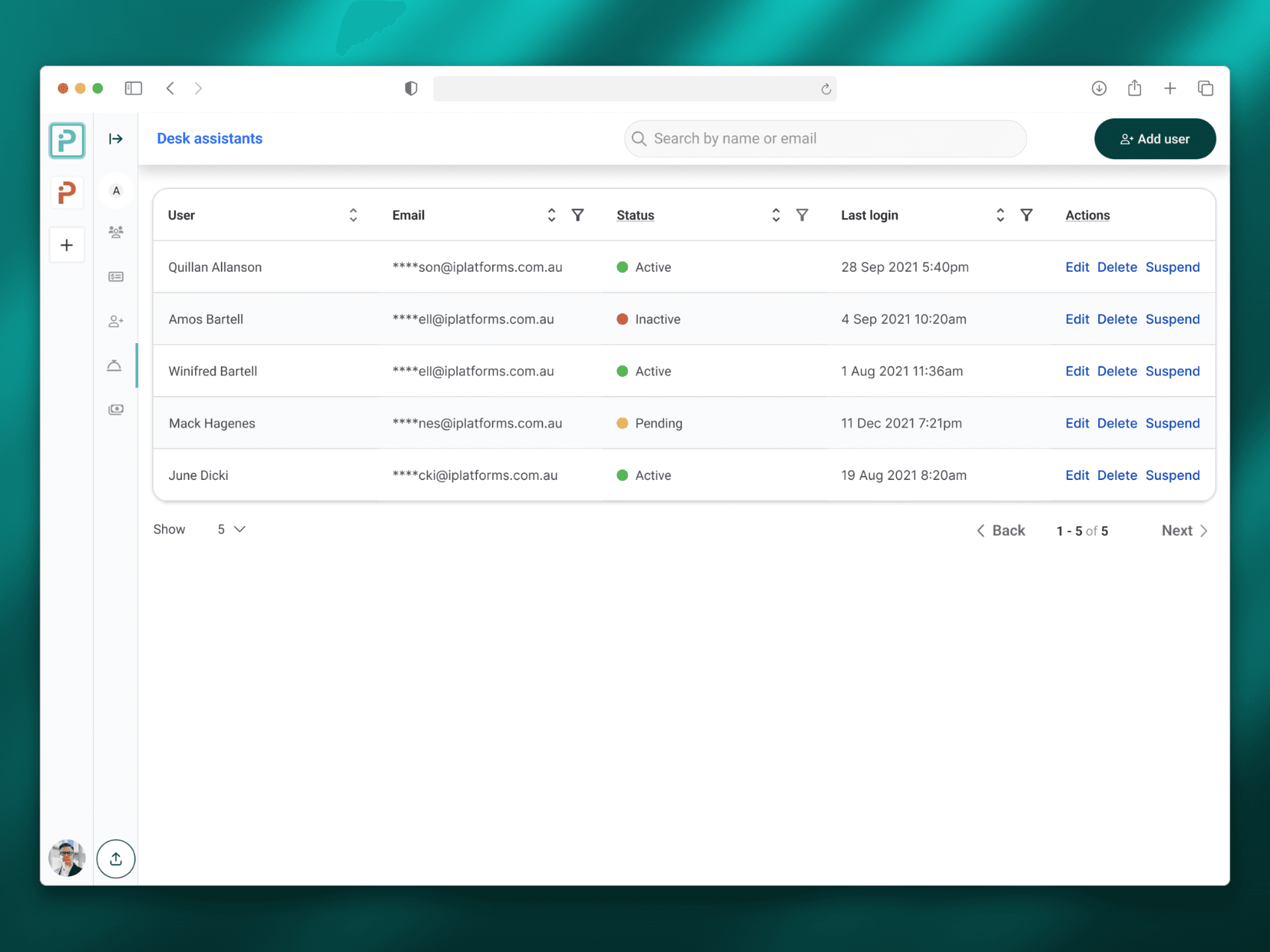
Advisers can add desk assistants instead of requesting support from iPartners staff
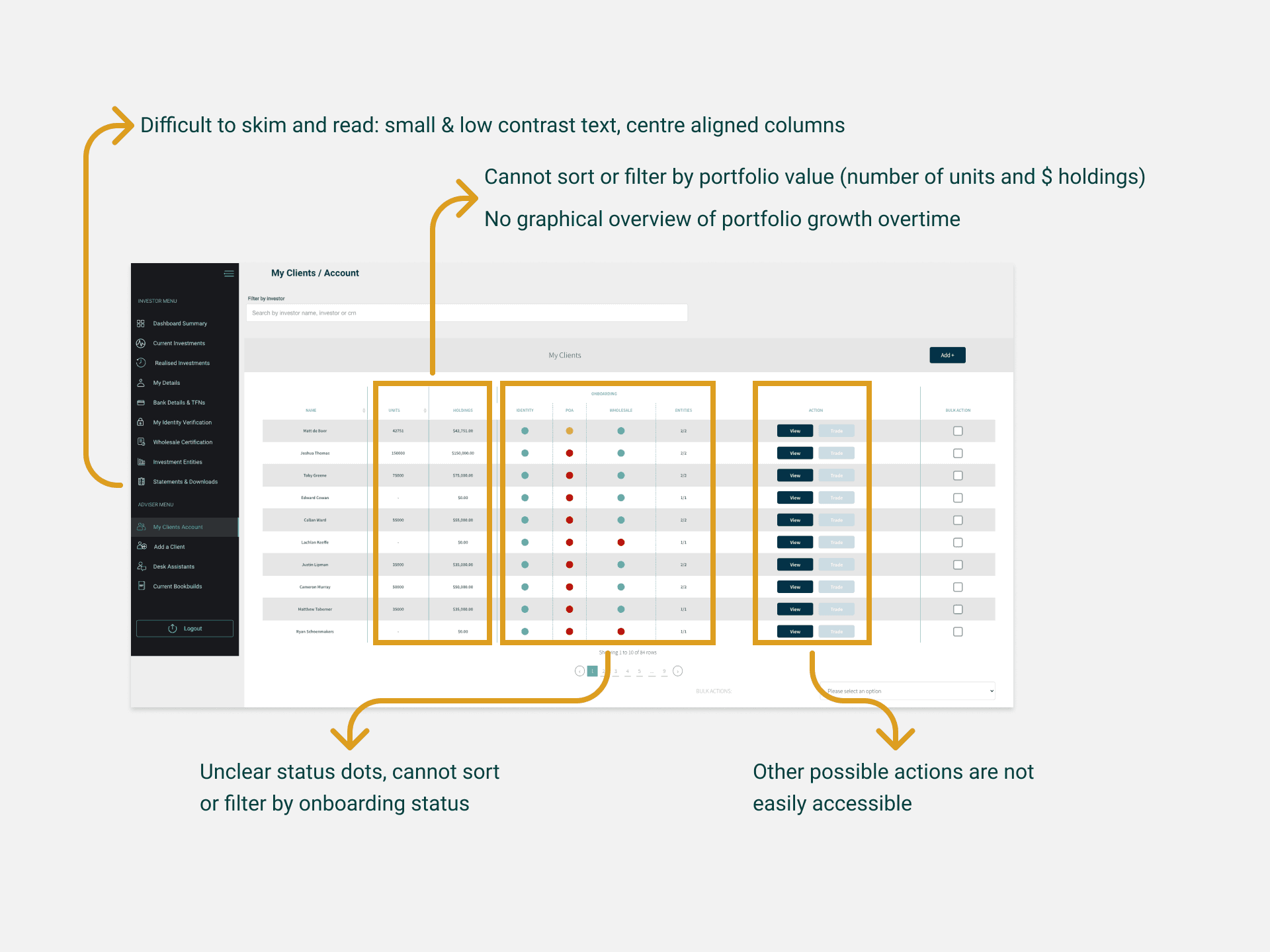
Before: The current client list has no sorting or filtering, is difficult to skim and read, and confuses advisers with the multiple onboarding status dots.
After: The new client list shows what each client's onboarding status is, and can be sorted and filtered by columns. An additional action "Complete onboarding" is added at the end of each row if the action is applicable. (Note that details on other columns have been removed to focus on onboarding-related columns).
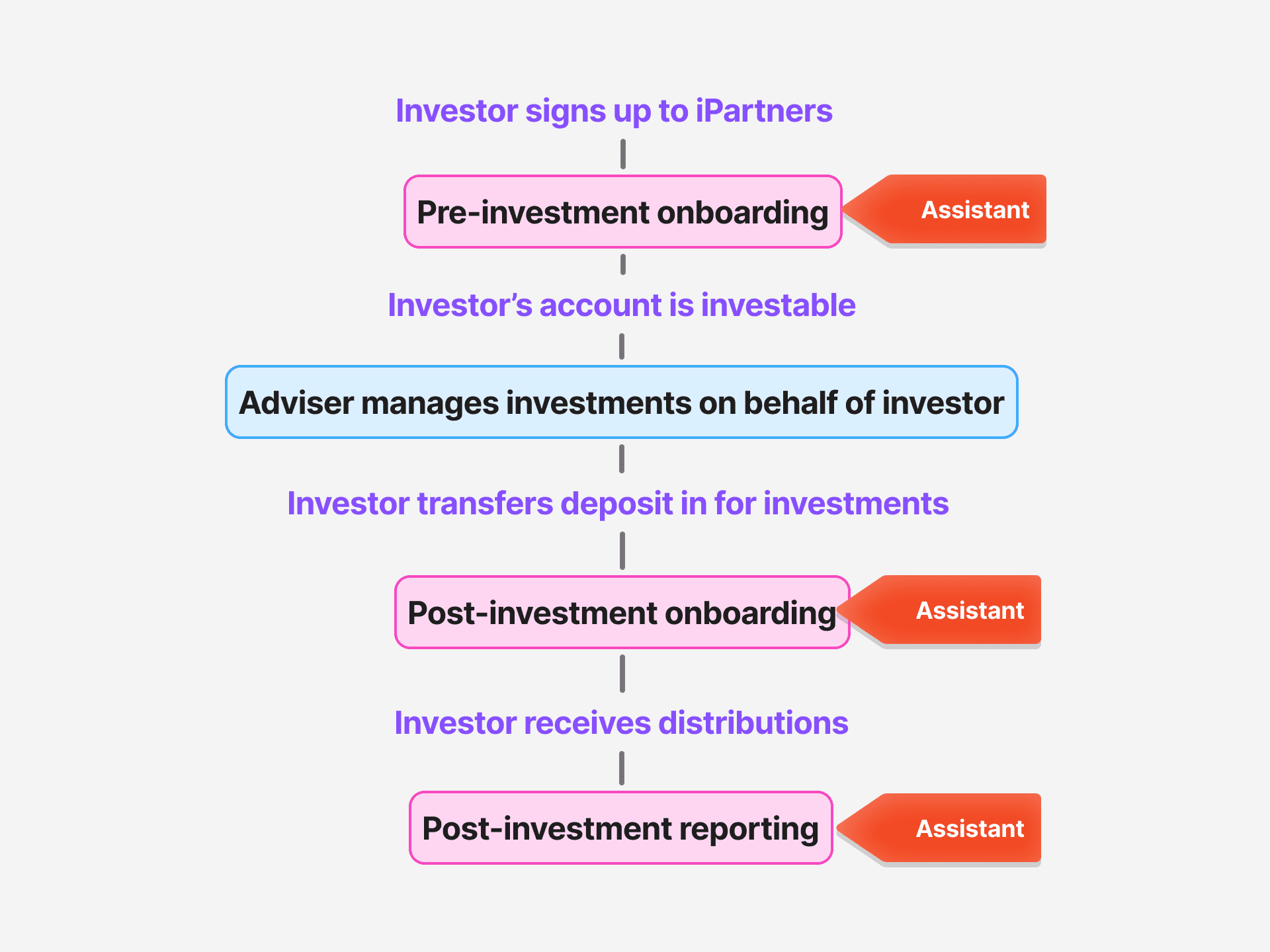
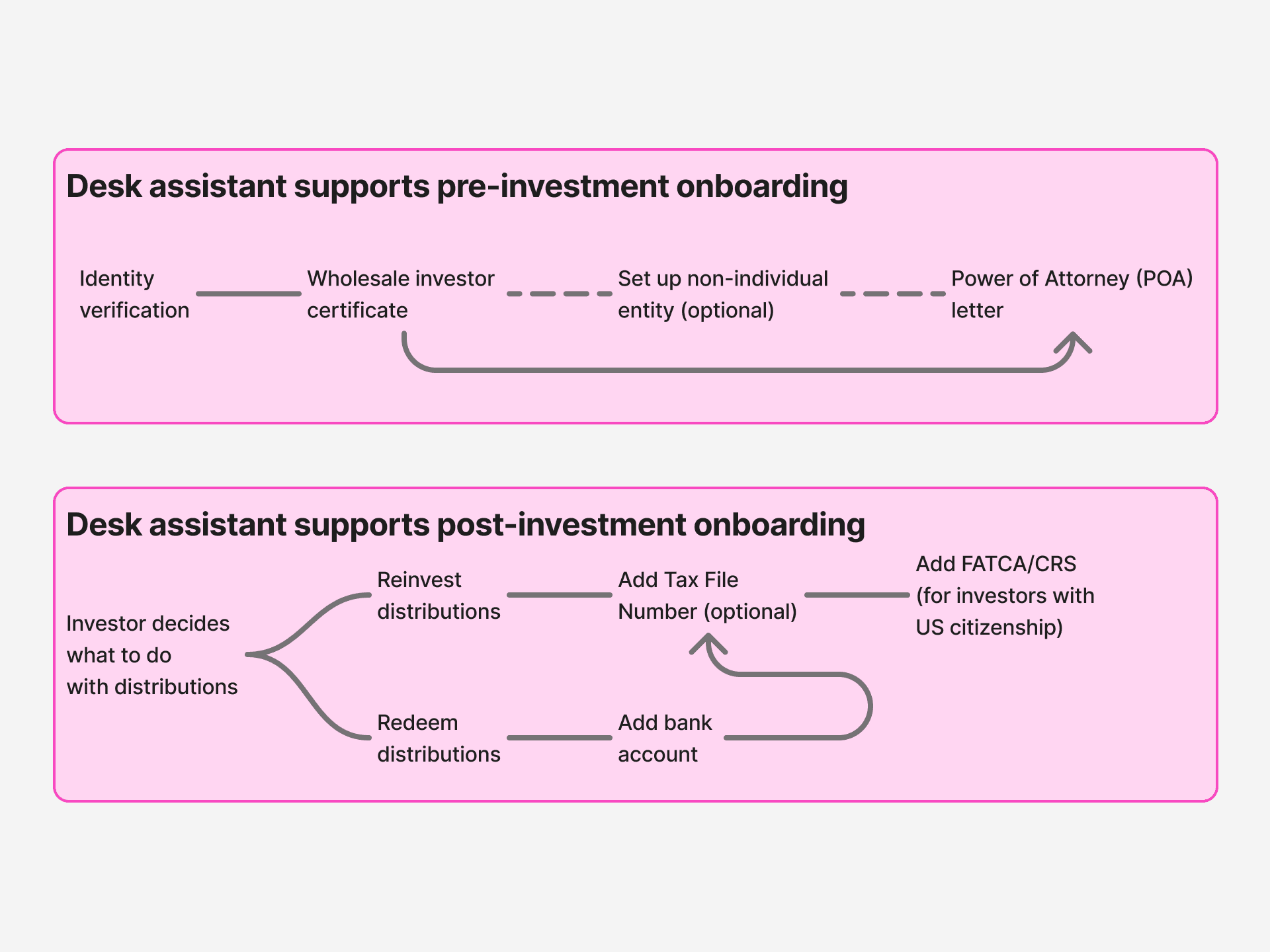
An example user flow of a desk assistant reviews a user's pending onboarding status due to a missing Power of Attorney (POA). The assistant submits the POA and the status changes to waiting to be processed by iPartners.
Before: The design makes it hard to understand which fields are editable and which are not (for example, all personal details field are not editable after investor has finished identity verification, but it is not obvious from the design). Sensitive contact information is always shown.
After: The new design shows clearly which fields are editable and is neater. Sensitive contact information is masked for security.
Before: The current client list has no sorting or filtering, is difficult to skim and read, and confuses advisers with the multiple onboarding status dots.
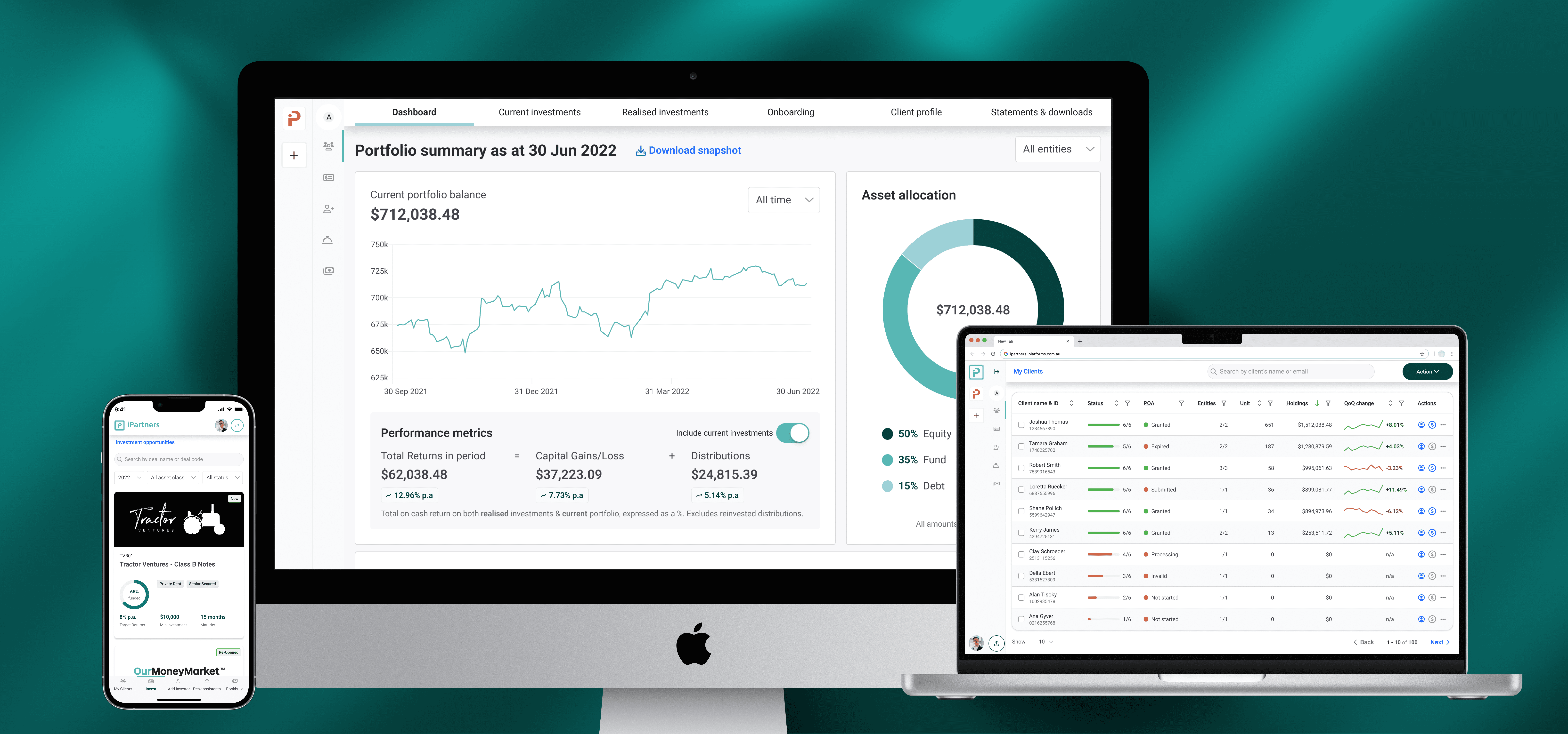
After: The new client list shows each client's portfolio growth (illustrated by the sparkline charts and returns %) and can be sorted and filtered by columns (most importantly by portfolio holdings value and number of units held). Additional actions such as Download statements are also added.
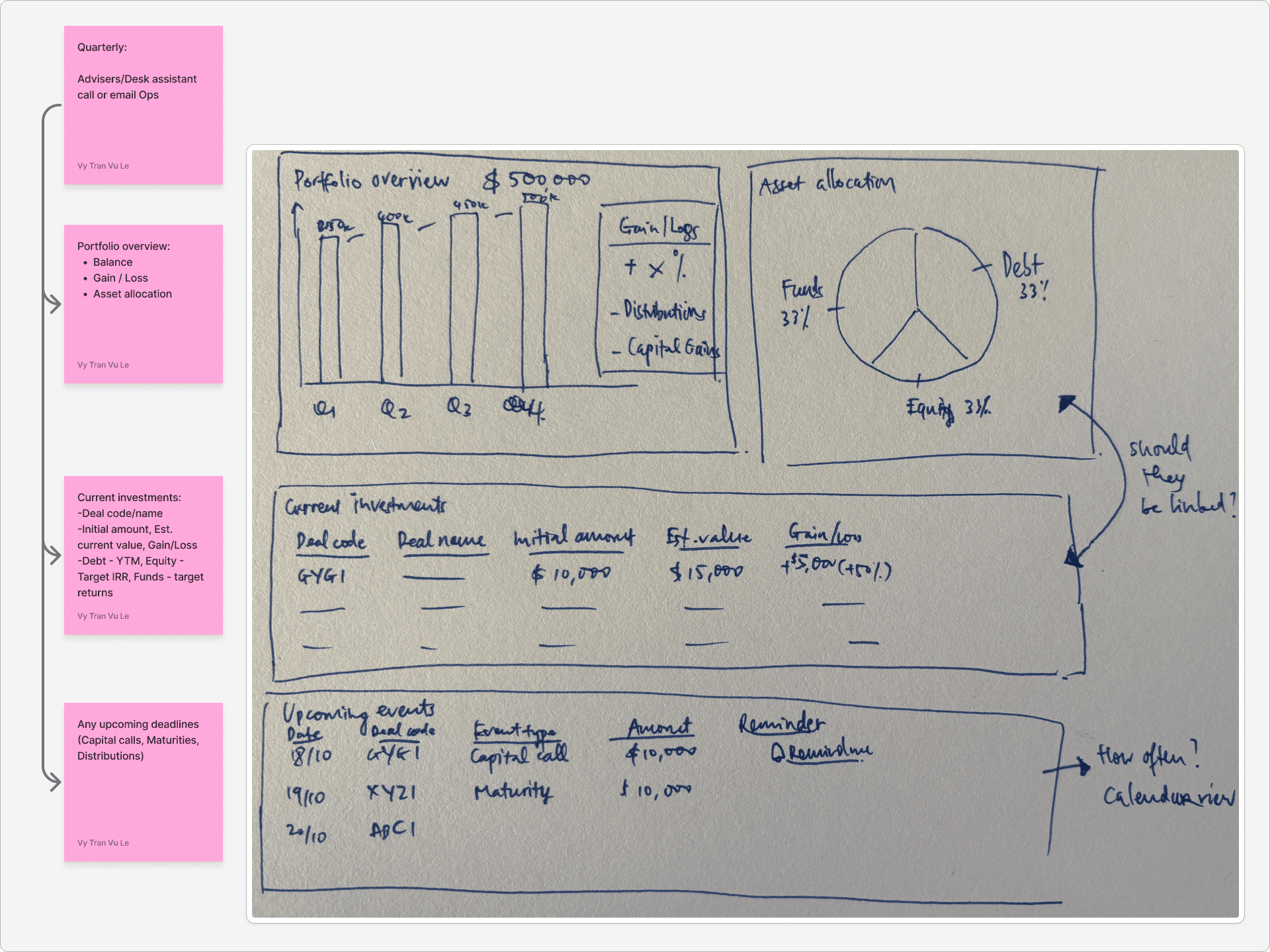
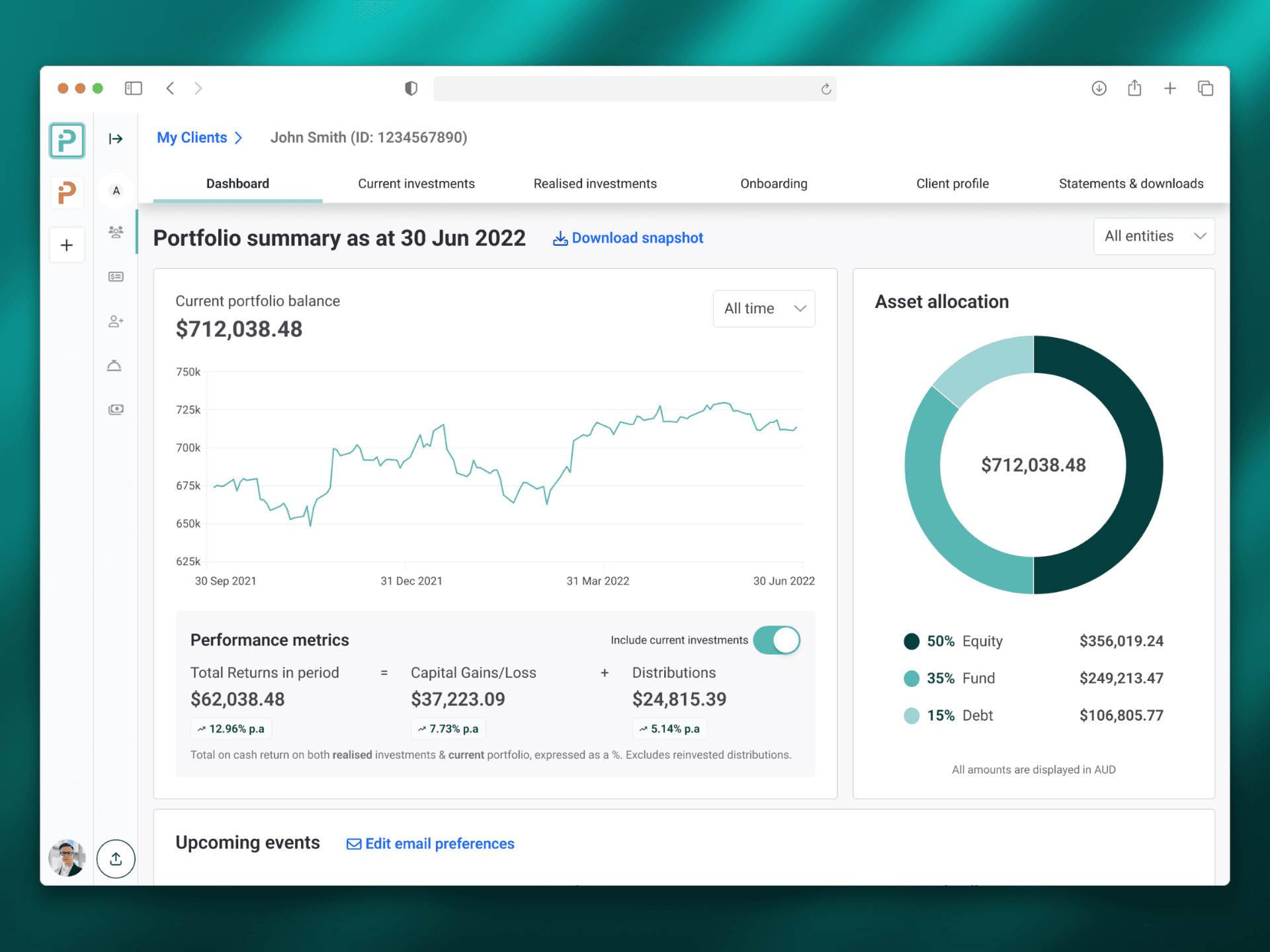
The top of the dashboard provides advisers with the key performance metrics and asset allocation for each client, at the overall level (all entities) or at each entity level.
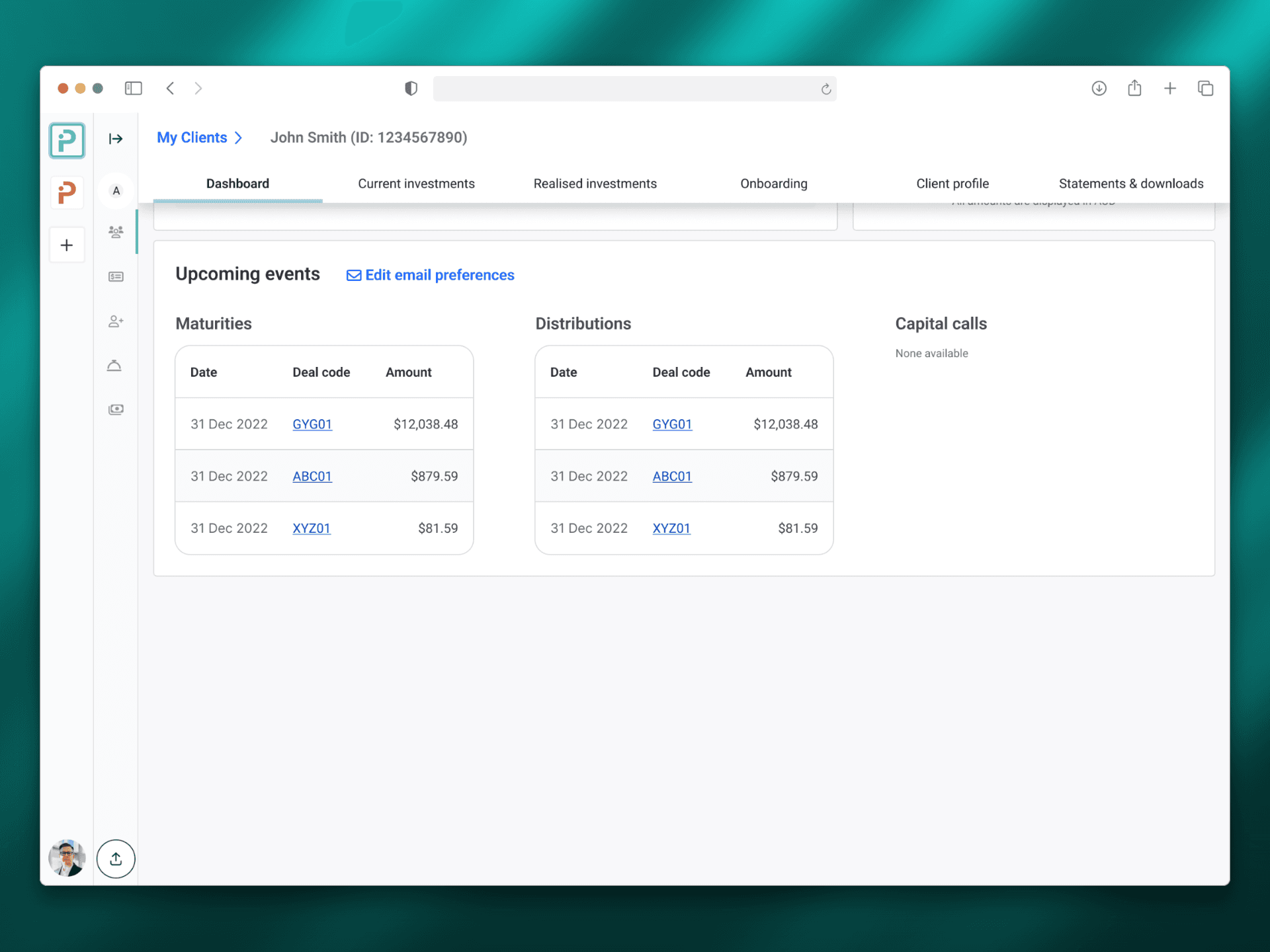
The bottom of the dashboard lists all upcoming events (maturities, distributions, capital calls). There's also a shortcut to edit investors' email preferences if they want to opt out of these email alerts.
The top of the dashboard provides advisers with the key performance metrics and asset allocation for each client, at the overall level (all entities) or at each entity level.
Before: The current Investment opportunities tab only has filtering by year, and shows no funding status of each deal.
After: The new tab design adds searching of deals by name or deal code, other filters by asset classes and deal status, as well as a funding status for each deal which helps advisers understand if a deal is under- or oversubscribed.